History of plastic extrusion
The history of plastic extrusion
The quality objectives are: to cultivate the habit of positive thinking and proactively and promptly keeping abreast of the latest technologies in the learned courses, to foster a spirit of continuous exploration and hard work, and to develop a sense of patriotism, national pride, and professional and industry pride.
Unit One Overview of Extrusion Molding
I. History and Current Situation of Extrusion Molding Technology
Extrusion molding technology, as one of the polymer processing techniques, has grown along with the development of the polymer processing industry. In the 1950s, the development of petrochemicals led to the rapid maturation of the polymer industry; in the 1960s, the production of the three major synthetic materials - plastics, rubber, and chemical fibers - shifted towards large-scale operations; in the 1970s, the total volume of synthetic polymers worldwide surpassed that of metallic materials; since the 1980s, efforts have been made to functionally modify high molecular materials to endow them with more special properties and application functions, moving towards the development of new types of materials such as green and environmentally friendly, high-performance, composite, functional, and intelligent ones. Polymers can only become useful products through molding processing, which is an indispensable production step for high molecular materials.
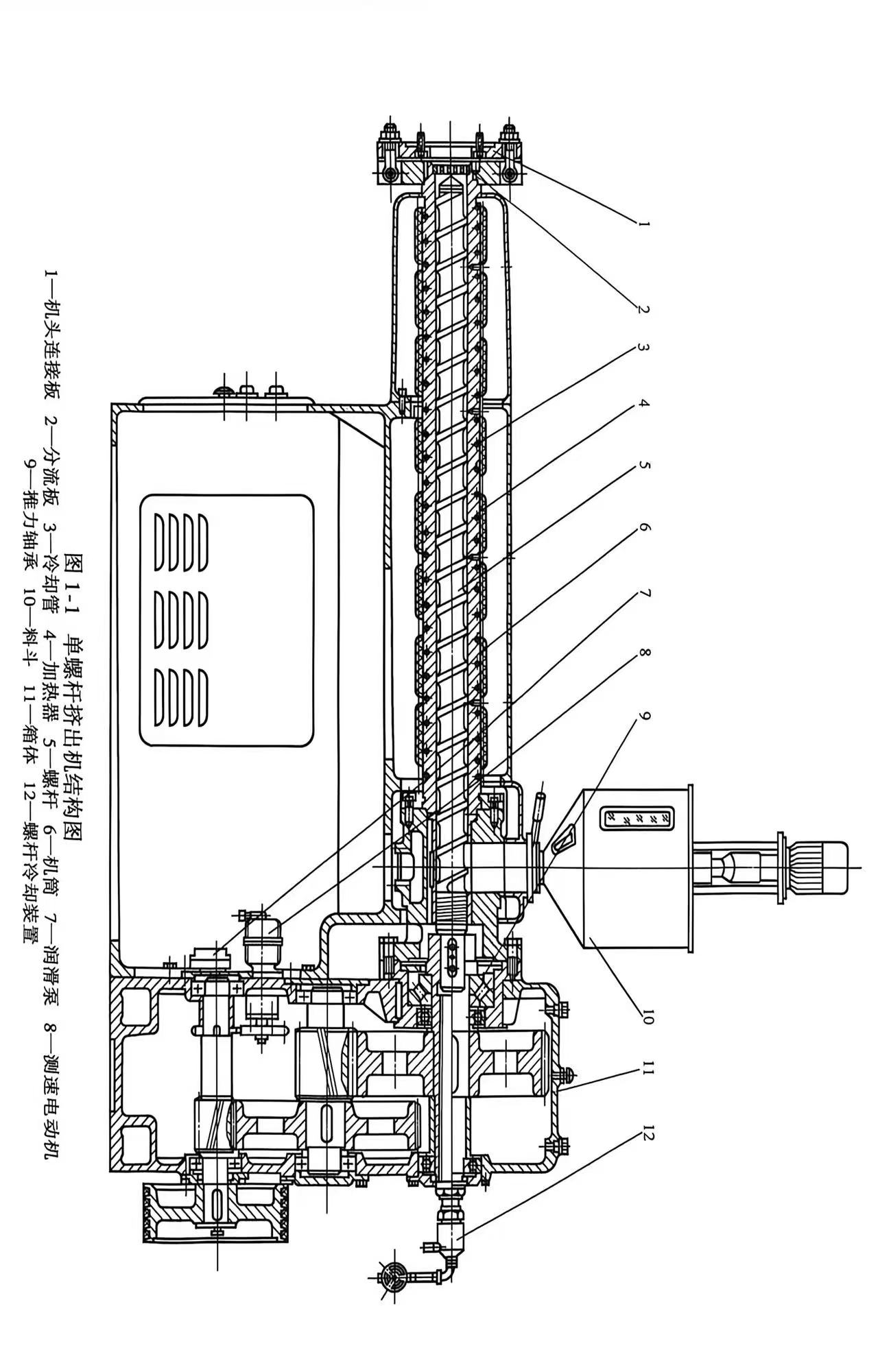
Extrusion molding, as an important technology in the polymer processing industry, has developed through mutual promotion and interdependence between the application engineering technology of polymer resins and the research and development technology of extrusion production equipment. Various extrusion products include: early hard polyvinyl chloride (PVC) pipes, coated cables, polystyrene (PS), polypropylene (PP) and acrylonitrile-butadiene-styrene copolymer (ABS) sheets and plates, polyethylene (PE) blown films and coated films, etc.; nowadays, PVC profiles, cross-linked PE, aluminum-plastic composite, reinforced polypropylene (RPP) pipes, biaxially oriented polypropylene films, multi-layer co-extruded composite films, films with special properties such as high barrier, breathability, self-adhesiveness, heat shrinkability, and self-degradability, functional masterbatches and color masterbatches, foamed products. Extrusion processing methods are used to prepare modified polymer materials, such as blending reinforcement and toughening technology, radiation modification technology, nanocomposite technology, and other new modification technologies. Various extruders with different structures and functions, such as kneading screw extruders, vented extruders, twin-screw and multi-screw extruders, reactive extruders, and combined extruders, are forming devices established to adapt to the physical and chemical properties of polymers, possessing specialized functions required for various products, and capable of implementing the production of various products.
 Single screw barrel drawing.jpg